By Falk Altenhöfer
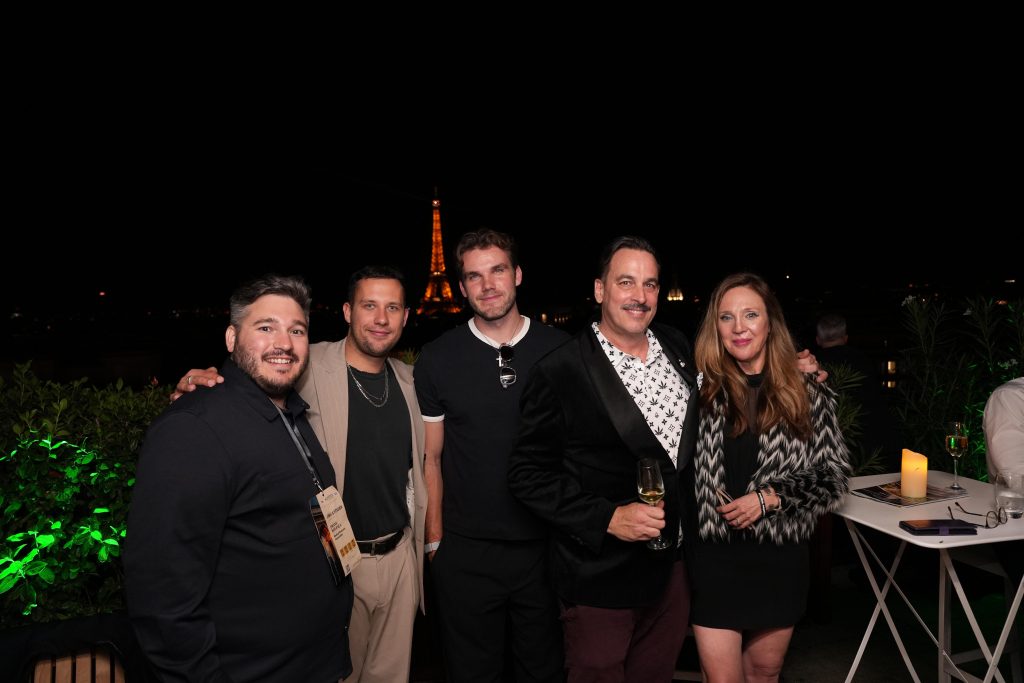
On 29 September, Paris hosted the day of sessions of the third Science in the City International by the Medical Resource Association, a two day symposium on medicine, law and plant science at the Elysées Biarritz. After two editions in Bordeaux, the event brought together more than 40 international speakers. The team from Remexian Pharma was on site and recorded three panels that day. Remexian supports us in transparency and education, and we turned the recordings into this overview for everyone thinking about entering the French market. Thank you to the hosts Kristen and Timothy Beury and Charles Stéphane Messal.
The quotes below are paraphrased translations from French and English recordings that were transcribed by machine. Some names are spelled by ear.
At a glance
- Cannabis is treated as a medicinal product in France, with a special status. A start is expected in 2027.
- Without a French exploitant and a responsible pharmacist, there is no market access.
- The temporary authorisation (ATU) is national. A dossier from Poland or Germany does not replace it.
- Expect EU GMP quality, reproducibility and full traceability from cutting to finished product.
- In the end, physician education and reimbursement decide success.
1. Timing: why the waiting hurts
Aurélien Bernard, founder of Newsweed, set the scene. France has over 60 million inhabitants and a patient potential of about 300,000 people in the five indications of the pilot. Depending on the source, estimates range from 100,000 to over 400,000 patients.
“They did not reinvent the wheel, they fitted into medicines law and the health insurance system. It has to start first, but once it starts, it stays.”
Ludovic Rachou, president of the trade association UIVEC, recalled the expectations. After the law passed at the end of 2023, people expected an opening in January 2025, and now it looks more like mid 2027.
“Two and a half years of waiting is hard for a company in an uncertain economic climate.”
Brahim, founder of the cultivation project PGP in the Dordogne, spoke two days before the Council of State resumes its work on 1 October. First came the go from the Ministry of Health, then from the European Commission, then the Council of State, the texts were transmitted on 2 July, and then the summer break (see also Newsweed on the decree submitted to the Council of State).
“There is no blockade, just procedures that take time. If nothing has happened in a month, we will start asking questions.”
2. The approval path
Marie Saint-Cézard, a lawyer specialised in pharmaceutical law, was clear:
“In France we are talking about medicinal products, with an ad hoc status, but they are medicinal products.”
Every company should first check which products in its portfolio the ANSM could actually approve. The implementing order is not yet published, but she expects no major surprises. Dossiers may be validated in other EU countries, but the temporary authorisation is national and must meet national requirements, including composition, pharmaceutical form and labelling.
Dounia, a pharmacist and founder of Accès Pharma Consulting, often hears that a dossier has already been filed in Poland.
“That is really a good start.”
But a full five module dossier is required, with modules 4 and 5 allowed to be bibliographic. Having an authorisation and an exploitant is only “half the work”. In gap assessments she checks stability data, a pharmacovigilance system, whether the final product matches the documentation and whether the European Pharmacopoeia is respected. By her estimate, review plus follow up periods take about 110 plus 80 days (“if I am not mistaken”), so almost a year that companies should use to train physicians and identify prescribing centres. Background on the pilot and the transition is available on the ANSM Q&A page.
3. The exploitant: a French marriage
Rita, speaking for the French exploitant side:
“The exploitant is the gold standard of accountability.”
Only the exploitant talks to the authorities and guarantees the product is safe. Anyone entering France is basically entering a marriage, so the partner must be chosen carefully. Batch release, recalls, pharmacovigilance, medical information and physician training sit with the exploitant, and the responsible pharmacist is personally liable, including under criminal law.
Dr. Zimmermann brought the German experience: in fragmented supply chains, responsibility gets diluted with every additional step, shortages were frequent and therapies had to be switched.
Marie Saint-Cézard warned that companies from looser markets must not underestimate the responsibilities of the authorisation holder and the exploitant, especially if they plan to set up their own exploitant company in France.
Michael, an EU GMP manufacturer from Portugal, sees France as a classic dossier market like Portugal, Poland or New Zealand. Unlike Germany or the UK with their magistral and specials models, the only real particularity in France is the exploitant.
4. Quality and supply chain
Michael did the maths: generously counted, there are only about 65 to 90 EU GMP facilities for pharmaceutical cannabis worldwide, many not operating, some pure processing centres, so called GMP washing centres.
“The pharmacopoeia speaks not of trim, not of low grade GACP flower, but of EU GMP whole flower.”
The bottle has to be reproducible within 5 percent standard deviation, in the volumes France needs and at a price the authorities accept. His prediction that France will start is so old that it “sounds like a broken clock”, but he believes it will come very soon.
Quentin Bovet, president of a French producer, named three expectations: standardisation, traceability and security, because it is a narcotic. France lacked the know how to build such facilities, so expertise had to be brought in from abroad. So far only a few products are identified, mainly THC to CBD ratios of 1 to 1 and 1 to 2.
“Cannabis unfortunately has a bad reputation. It is our job to educate.”
A French producer considers domestic production quite necessary: closeness to prescribers and authorities, local stock, fast manufacturing. Imports are still legitimate. Akram, a Canadian producer, above all wants to know which dosage forms will be approved and is investing in EU GMP for it.
5. Physicians, HAS and reimbursement
Ludovic Rachou described the change among doctors. Around 2,000 physicians have been trained and have prescribed at least once, often at the best hospitals. Many cannabis companies do not come from pharma and try to enter France with the Canadian or German market in mind, but these are “radically different cultures”.
“In 2020 they said: this is a drug. Today you hear something very different.”
Rita sees reimbursement as the biggest medium term lever and names the sales forecast as the biggest risk.
“A medicine only exists in France once it is reimbursed.”
Zoé, who represents a trade association and chairs the French standardisation committee for cannabis, reported on a joint dossier from about 15 companies, mostly direct competitors, submitted to the HAS. It was updated two weeks ago at the HAS’s request. In addition, about 15 interviews were held with physicians from the pilot. In October, the first ISO committee dedicated only to cannabis holds its first meeting.
“All that is missing now is a minister’s signature.”
6. Money and staying power
Brahim explained what the waiting means for financing: without a text, France 2030 grants no money, funds and banks have exclusion criteria, and investors want something concrete.
“What kills projects is uncertainty. Investors want dates and numbers.”
What remains are business angels with tickets of 20,000 to 30,000 euros, and his investor list counts about 110 people. So far he has raised roughly 3.5 million euros, about 1 million of it for a proof of concept in the Netherlands. Now US funds and larger banks are getting in touch, and the next goal is about 40 million euros to build the facility.
Mathieu, a Canadian producer, can wait because he sells in Canada, the UK, Germany and Australia.
“For us it is always patient first.”
Akram warned from Canadian experience that the bankruptcy rate since legalisation is around 65 percent, and that even registering a simple flower in Poland takes at least nine months.
“Even if the decision came tomorrow, is everyone ready for the next step?”
Jean-Baptiste, a pharmacist and founder of YD Pharma in Portugal, is currently planning without France but expects it to become Europe’s second largest market after the UK in the long run. Dr. Stefanoski reminded the audience that many people in the EU already self medicate and in some cases know more about dosing than healthcare providers.
7. Who is who
| Group | Who |
|---|---|
| Authorities | ANSM (authorisation), HAS (assessment and reimbursement), Council of State and Ministry of Health (implementing texts) |
| Associations | UIVEC with president Ludovic Rachou (founded 2020, also CEO of Delos Health), and Zoé’s trade association with the standardisation committee |
| Advisory and media | Marie Saint-Cézard (pharmaceutical law), Dounia (Accès Pharma Consulting), Aurélien Bernard (Newsweed, market and policy) |
| French producers | Quentin Bovet, Jean-Baptiste as representative of a French licence holder in Brittany, Brahim with PGP in the Dordogne (10 hectares, 22,000 m² of greenhouse) |
| International producers | Michael (Portugal), Jean-Baptiste (YD Pharma, 4 tonnes per year), Mathieu and Akram (Canada), Dr. Sasho Stefanoski (PHCANN International) |
8. Your next 90 days
- Contact French companies and find an exploitant.
- Review your portfolio and run a gap assessment.
- Get regulatory, legal and economic support, including for pricing and reimbursement dossiers.
- Join a trade association.
- Use the waiting time: train physicians, identify prescribing centres, secure supply continuity.
Our take
France is more opportunity than mirage, but it is no market for shortcuts. Those who think pharmaceutically, find a good partner and stay financially strong will have the edge. And if you wonder whether you are ready: one panelist asked only one question, whether you speak French.
Sources and further reading
- Science in the City International 2026, official page
- Faculty list 2026
- Newsweed event page on Science in the City Paris 2026
- Newsweed: decree on reimbursement submitted to the Council of State
- ANSM: questions and answers on the medical cannabis pilot
- French Senate written question on the pending decrees
Panel statements are based on recordings from 29 September 2026, provided by the team of Remexian Pharma.