How the World’s Fifth-Largest Country Is Poised to Become the Global Powerhouse in Medical Hemp and Cannabis Production
1. The Sleeping Giant Wakes Up
On January 28, 2026, Brazil’s National Health Surveillance Agency (ANVISA) unanimously approved four landmark resolutions that, for the first time, allow the cultivation, production, and commercialization of medical cannabis on Brazilian soil. The decision didn’t merely adjust a regulation – it ignited the starting gun for what could become the most consequential shift in the global medical cannabis supply chain in over a decade.
Until now, Brazil was entirely dependent on imports for its cannabis-based medicines – a slow, expensive, and bureaucratic process that put effective treatment out of reach for millions of patients. Monthly costs for imported products frequently exceeded 2,000 Brazilian Reais (roughly USD 350), an insurmountable barrier in a country where the minimum wage hovers around 1,500 Reais. That era is ending.
Why Brazil Could Become the World’s Largest Hemp Producer
The ingredients for global dominance are all there. Consider the fundamentals:
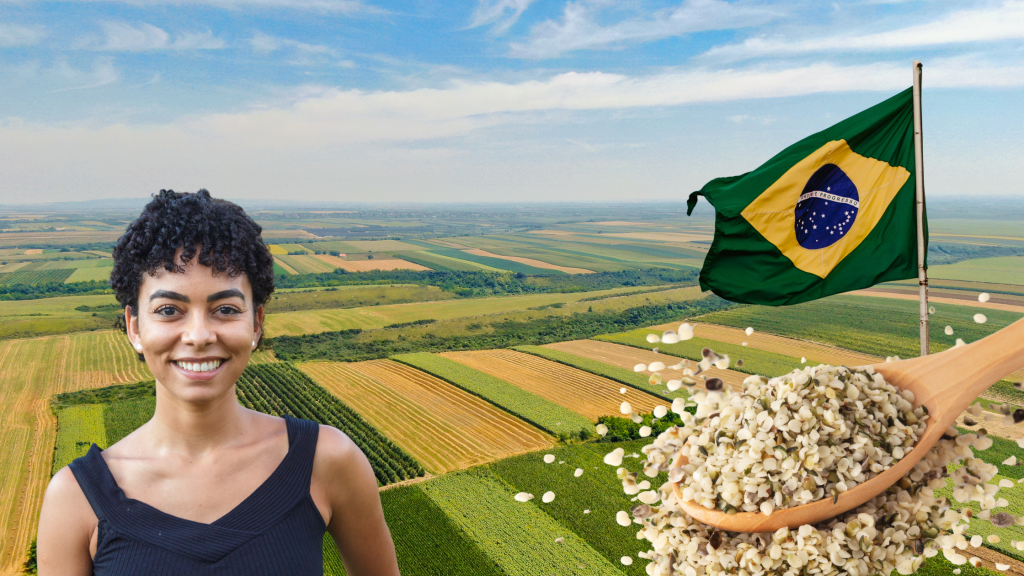
Unrivaled Climate: Brazil spans tropical and subtropical zones that enable year-round outdoor cultivation – no costly indoor grow facilities, no heating, no artificial lighting. While Canadian producers battle minus-30-degree winters in energy-intensive greenhouses, Brazilian cultivators can harvest multiple cycles per year under natural sunlight. This alone could cut production costs by 50–70% compared to North American or European competitors.
Scale of Land: Brazil has approximately 63 million hectares of available arable land not currently under cultivation. Even a fraction dedicated to hemp and medical cannabis would dwarf the cultivated acreage of any current producing nation. For comparison, all of Canada’s licensed cannabis cultivation area is measured in the low thousands of hectares.
A Domestic Market of 210+ Million: Brazil is not only a production opportunity – it is a consumption powerhouse. According to the Ministry of Health, over 670,000 Brazilians already use cannabis-based products, a number expected to grow exponentially now that costs will decline and new delivery forms become available. More than 50 companies are already authorized to manufacture cannabis medicines. The internal demand alone could sustain a billion-dollar industry before a single gram is exported.
Cost Advantage: Low labor costs, affordable agricultural land, and established agribusiness logistics (Brazil is the world’s largest exporter of soybeans, coffee, and orange juice) create a production cost structure that few countries can match. Industry advisors report significant interest from Chinese and other Asian markets in Brazilian hemp as a raw material source.
Research Backbone: In February 2025, Embrapa – Brazil’s powerhouse national agricultural research agency – launched a 12-year hemp cultivation research program. The initiative includes building a genetic seed bank, adapting varieties to local climatic conditions, and establishing international research partnerships. This long-term commitment signals that Brazil is not looking for a quick buck but building durable competitive advantages.
Latin America as a whole is forecast to grow at a CAGR of 18% in medical cannabis, driven by favorable growing conditions, low production costs, and increasing government interest. Within that region, Brazil stands out as the undisputed leader by market size, population, agricultural capability, and now – regulatory clarity.
2. The Right Path for Patients
For the estimated 670,000 cannabis patients in Brazil – and the millions more who could benefit – the new regulations represent a watershed moment. The reforms address the three biggest barriers patients have faced: cost, access, and therapeutic options.
Expanded Delivery Methods: Beyond the previously authorized oral and inhalation routes, ANVISA now permits sublingual, buccal, and dermatological applications. This means more precise dosing, faster onset of action for sublingual products, and localized treatment through dermatological formulations for conditions like psoriasis, neuropathic pain, and eczema.
Broader THC Access: Products with THC concentrations above 0.2% were previously restricted to patients in palliative, irreversible, or terminal conditions. The new rules extend access to patients with serious debilitating diseases – a significantly broader category that includes chronic pain, treatment-resistant epilepsy, multiple sclerosis, and other conditions where conventional therapies have failed.
Compounding Pharmacies: For the first time, compounding pharmacies will be able to dispense CBD-based preparations through individualized prescriptions. This enables personalized dosing tailored to each patient’s needs and could dramatically reduce costs compared to imported standardized products.
Falling Prices: With domestic cultivation and production, the reliance on costly imports disappears. Legal experts predict that treatment costs will drop substantially, potentially making cannabis-based medicine accessible to lower-income populations for the first time.
3. The Four Pillars of the New Regulatory Framework
ANVISA published four new Board Resolutions (RDCs) in the Federal Register on February 3, 2026. Together, they create a comprehensive framework covering commercial exploitation, research cultivation, and experimental patient-association models.
| Resolution | Scope | Effective Date |
| RDC #1,015 | Marketing authorization for cannabis products (manufacture, import, commercialization). Replaces RDC #327/2019. | May 4, 2026 |
| RDC #1,013 | Cultivation of cannabis with THC ≤ 0.3% for medical purposes and research. | Aug 4, 2026 |
| RDC #1,012 | Cultivation without THC limit, exclusively for scientific research. | Aug 4, 2026 |
| RDC #1,014 | Regulatory Sandbox for non-profit patient associations: cultivation, production, and dispensing. | Feb 3, 2026 |
Key Features of the Product Regulation (RDC #1,015)
Marketing Authorizations can now be renewed for 5 years, conditioned on submitting a Clinical Development Plan with annual compliance reports. Trade names may be used (subject to future regulation), and advertising directed at healthcare professionals is permitted for the first time – limited to ANVISA-approved product information. The import of cannabis plants, extracts, and intermediates for domestic R&D and API manufacturing is now explicitly authorized. Quality requirements remain stringent: GMP certification, post-marketing surveillance, Risk Management Plans, Periodic Benefit-Risk Assessment Reports, and full batch traceability.
The Regulatory Sandbox (RDC #1,014)
The most innovative element: an experimental, temporary, supervised environment allowing non-profit patient associations to cultivate cannabis, produce plant-based APIs, and dispense preparations to their members. Participants are selected through public calls, with strict limits on production and patient numbers. The sandbox lasts up to five years and is designed to generate evidence for a permanent regulatory framework. ANVISA President Leandro Safatle acknowledged that patient associations have played a fundamental role where both the state and the market have failed.
4. Global Impact: Reshaping the Supply Chain
The global medical cannabis market was valued at approximately USD 24.9 billion in 2024 and is projected to reach USD 159 billion by 2033. Canada currently dominates global supply, exporting roughly 240 tonnes in 2025 – more than double the previous year. But the competitive landscape is shifting as Thailand and now Brazil enter the race with superior climate and cost advantages.
| Metric | Value |
| Brazilian Market (2025) | USD 856 million |
| Brazil Forecast (2034) | USD 1.55 billion |
| Brazil 2026 Estimate (Kaya) | Over BRL 1 billion |
| Global Market (2024) | USD 24.9 billion |
| Global Forecast (2033) | USD 159 billion |
| Latin America CAGR | 18% |
| Canada Exports (2025) | ~240 tonnes |
| Registered Patients Brazil | 670,000+ |
| Authorized Producers Brazil | 50+ |
5. Risks and Headwinds
Constitutional Amendment PEC 45/2023: A proposed amendment seeks to criminalize all cannabis activities – including medical use and research. If passed, it would dismantle the entire framework.
Law Enforcement Conflicts: In January 2026, police raided the Mama Flor patient association in Rio de Janeiro, destroying 120 cannabis plants and initiating trafficking investigations – while the association had a pending court case seeking cultivation authorization.
Export Ban: The current framework prohibits exporting Cannabis sativa L., including seeds. For Brazil to become a global supplier, this restriction must eventually be lifted.
Regulatory Complexity: Georeferencing, continuous video surveillance, full traceability, and mandatory plant destruction above 0.3% THC create significant compliance burdens for smaller players.
6. Conclusion: A Giant Enters the Arena
Brazil’s January 2026 ANVISA decision represents a quantum leap. For the first time, the regulatory foundation exists for a complete domestic value chain – from seed to finished pharmaceutical product. The combination of market size, climate, cost structure, agricultural expertise, and growing research infrastructure gives Brazil a unique starting position that no other emerging cannabis market can match.
For patients, this is undeniably the right path. After years of prohibitive import costs, legal uncertainty, and limited therapeutic options, Brazilian patients finally have a framework that puts their needs at the center. For investors and entrepreneurs, the window of opportunity is opening – but navigating Brazil’s complex regulatory landscape will require deep local expertise and patience.
The giant has awoken. The world should be watching.
Sources: ANVISA (gov.br), Lexology / Licks Attorneys, CNN Brasil, Brasil de Fato, MJBizDaily, IMARC Group, Prohibition Partners, Market Data Forecast, VEJA.