There are people who shape an industry not by being the loudest voice in the room, but by being the one who brings everyone to the table.
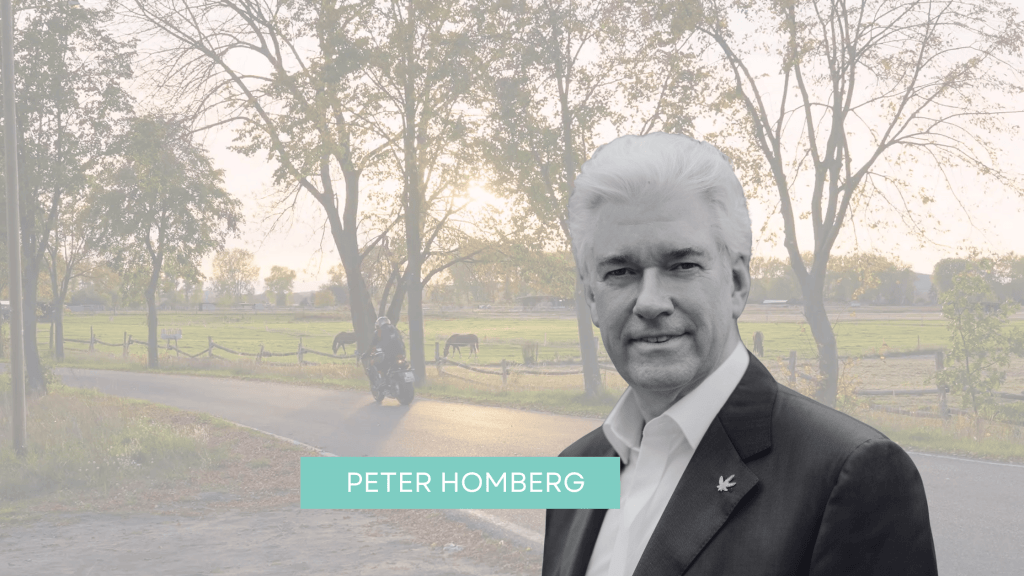
Peter was one of those people who really had an impact on the industry. Therefore we put him on the spotlight and produced a documentary.
The early days in Germany: Getting everyone at the table
In the early days of the German cannabis debate, the field was fragmented. Activists, doctors, lawyers, politicians, insurers, regulators and entrepreneurs often spoke about each other, rarely with each other. What Peter did differently was simple in theory and incredibly difficult in practice: he insisted on dialogue.
He understood early on that cannabis law in Germany would never move forward through confrontation alone. Progress required trust, technical depth and a shared language. Peter was able to translate between worlds that usually collide – legal doctrine and medical reality, political caution and economic necessity, public safety and patient access.
Crucially, Peter did not approach young companies with a list of reasons why something could not be done. His instinct was always the opposite: to look for a practical, legally sound solution within the existing framework. Especially for early-stage companies, this made a decisive difference. Instead of shutting ideas down, he helped shape them in a way that could actually survive regulatory scrutiny.
He did not romanticize cannabis, nor did he reduce it to a risk narrative. Instead, he treated it as what it is: a complex product embedded in complex systems. That credibility made him one of the very few people who could sit at the same table with ministries, public authorities, physicians and industry players and be taken seriously by all of them.
Supporting the public body: Ensuring laws that work in practice
One of Peter’s most underappreciated contributions was his work behind the scenes with public bodies. He understood that laws are only as good as their implementation. A paragraph may look coherent on paper, but if it cannot be applied in real-world settings, it creates friction, uncertainty and ultimately mistrust.
Peter invested an enormous amount of energy into helping authorities understand how cannabis actually moves through the system: from cultivation to import, from prescription to pharmacy, from reimbursement to patient. At the same time, he worked closely with companies to ensure that legal and regulatory requirements were addressed early – not retrofitted later under pressure.
His approach was always preventive. Clean structures, clear documentation and legally robust processes from day one. The goal was simple: to make companies less vulnerable in later stages, whether through audits, legal challenges or political shifts. He asked uncomfortable questions early, not to block progress, but to prevent failure down the line.
His focus was never on ideological wins. It was on workable, enforceable regulation. On systems that could withstand audits, court decisions and changing political winds. This is why many of the regulatory structures that exist today – even if imperfect – are more resilient than they would have been otherwise. Peter helped ensure that the system did not collapse under its own complexity.
Peter’s crystal ball: What will happen in Germany and Europe?
Peter was not a prophet, but he had an unusually clear sense of direction. He knew that Germany would not be an isolated case. Whatever regulatory model Germany developed would echo across Europe – for better or worse.
He anticipated that the separation between medical and adult-use cannabis would increasingly blur, that telemedicine, distribution models and cross-border supply chains would become pressure points, and that overregulation could be just as dangerous as underregulation. He warned repeatedly that half-solutions create grey zones – and grey zones invite instability.
One point Peter was always explicit about: cannabis belongs in the life sciences. In pharmaceuticals. In regulated, professional structures. He had little patience for narratives that treated cannabis as an exception rather than as a product subject to the same standards of quality, safety and accountability as any other therapeutic substance. And he never softened that position to make it more convenient.
If Peter were looking into his crystal ball today, he would likely say this:
Germany is still at the beginning. Europe is even earlier. The real work is not legalization, but normalization. Building systems that are boring, reliable and resilient. Systems that survive political cycles and public mood swings.
That was always his goal. Not headlines. Not hype. But a framework that lasts.
Peter did not just help shape cannabis law. He helped professionalize the way this industry thinks about responsibility, credibility and long-term impact.
Personal note
This year’s final DEEP-DIVE with Peter Homberg was meant to reflect on the past year and discuss what lies ahead, including the first reading of upcoming amendments to Germany’s cannabis law.
Instead, I am writing this the day after Peter’s funeral in Berlin.
Over more than five years, we hosted over 50 DEEP-DIVEs together on Cannabis-Startups.com. Long discussions. Disagreements. Shared clarity. Always mutual respect.
Thank you, Peter.
—
Falk Altenhöfer