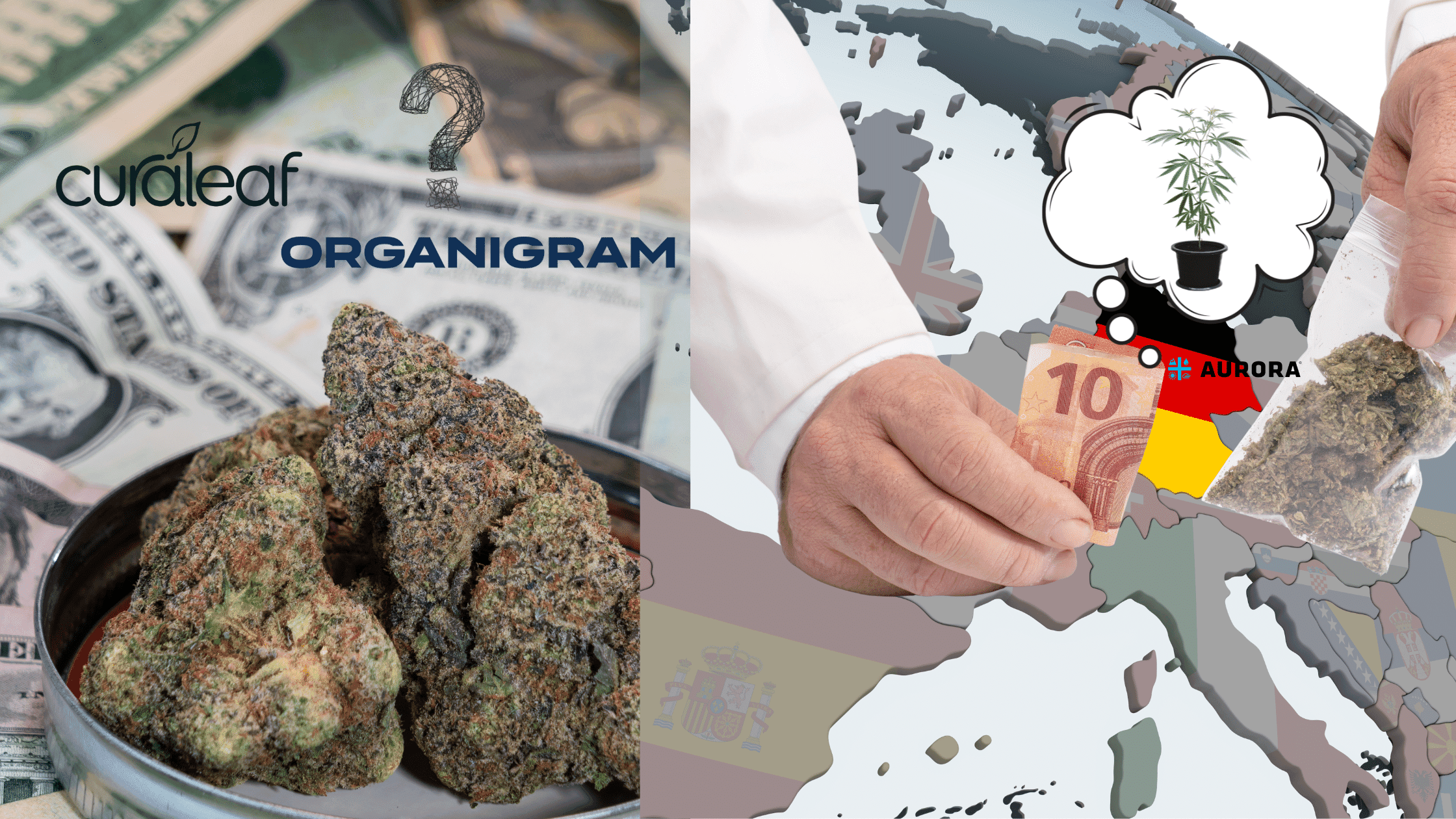
The hostile takeover battle between Curaleaf and Aurora Cannabis has entered its next round. The Alberta Securities Commission has dismissed Curaleaf’s application against Aurora’s share issuance program. Aurora is celebrating it as a win, Curaleaf is pushing back. The core of the dispute, however, remains unchanged: it is about price, about access to company data and, ultimately, about who will control Aurora’s European medical cannabis business.
What happened
In September, Curaleaf asked the Alberta Securities Commission (ASC) to stop Aurora from issuing new shares through its at-the-market (ATM) program while the takeover offer is outstanding. Curaleaf’s argument: every new Aurora share makes the offer more expensive, dilutes existing shareholders and makes it harder to reach the required acceptance threshold. Curaleaf called it an improper defensive tactic.
After an oral hearing on October 23, the ASC dismissed the application. Aurora announced the decision on October 26. The ATM program had been announced back in February 2026, more than six months before Curaleaf went public with its offer. According to Aurora, it was last used on August 18.
Aurora CEO Miguel Martin said the unsuccessful application merely distracts from the fundamental shortcomings of Curaleaf’s offer. On Monday, he followed up: the bid significantly undervalues Aurora.
Yesterday, October 27, Curaleaf Chairman and CEO Boris Jordan responded in a press release: “Aurora would like shareholders to believe the ASC’s ruling changes the fundamental debate. It does not.” Curaleaf backs this up with several points:
- A premium, not a discount: Aurora speaks of a discount. In fact, the offer of roughly US$5 represents an 86 percent premium to the unaffected average share price of about US$2.75.
- The application still had an effect: Aurora used the ATM program heavily in the days before the offer, even after Curaleaf’s public announcement. Only on August 18, shortly after Curaleaf raised concerns, did it stop. Since then, Aurora shareholders have been spared further dilution.
- No real process without Curaleaf: Excluding the bidder with a premium offer from due diligence while granting access to other parties can hardly be called a review of “all available strategic alternatives.”
- The global leader: Curaleaf repeats its vision of a combined global market leader (figures below).
The market took the news calmly: both stocks most recently gained a little over six percent each.
The offer at a glance
- Initial offer (August 2026): about US$4 per Aurora share in cash and Curaleaf stock, roughly US$272 million in total, a premium of about 45 percent
- Enhanced offer (October 5, 2026): 0.4013 Curaleaf shares plus US$1 in cash per Aurora share, implying about US$5
- Premium according to Curaleaf: 86 percent to the unaffected price (30-day average of US$2.75 before the announcement), 217 percent excluding Aurora’s cash
- Cap: a maximum of US$6 per share
- Expiry: December 4, 2026
Important: around 80 percent of the consideration consists of Curaleaf shares. What Aurora shareholders ultimately receive therefore depends heavily on how Curaleaf’s share price develops.
Aurora’s position: debt-free, undervalued, open to others
On October 14, Aurora’s board once again unanimously rejected the enhanced offer and recommended that shareholders take no action and not tender their shares. Anyone who has already tendered is asked to withdraw.
The core argument has been the same since August: Aurora is debt-free, has a solid cash position and operates EU-GMP-certified production as well as an international medical cannabis network. Curaleaf, Aurora says, wants to acquire exactly that strength at a discount while shifting its own risks, above all Curaleaf’s debt, onto Aurora shareholders.
One point stands out: Aurora has officially started a process with several interested parties, signaling that it would be willing to sell. Just not on these terms, and not necessarily to Curaleaf.
Curaleaf’s position: “Let us into the data room”
This is exactly where Curaleaf comes in. Jordan accuses Aurora of granting due diligence access to other bidders while keeping out the only bidder with a binding public offer. The enhanced offer was developed entirely from publicly available information. With access to the data, the implicit message goes, Curaleaf could substantiate the synergies and possibly even improve its offer.
Curaleaf also questions the independence of Aurora’s financial advisor Fort Capital, whose fees, according to its own disclosure, may depend on an alternative transaction being completed or on no transaction at all.
The picture Curaleaf paints is big: a global cannabis company in 17 countries, with more than US$1.5 billion in revenue, nearly US$350 million in adjusted EBITDA, at least US$40 million in annual cost synergies and a market capitalization of over US$3 billion.
Why this matters for Germany
This is not just North American stock market theater. Aurora has for years been one of the most important suppliers in the German medical cannabis market and has EU-GMP production directly in Europe. Curaleaf, in turn, is already firmly established in the German pharmacy market through Curaleaf International and Four20 Pharma.
If the deal goes through, it would create a supplier with significantly more weight in the German pharmacy channel in terms of portfolio, pricing and supply capacity than either company has on its own today. For pharmacies, wholesalers and telemedicine platforms, that would mean fewer suppliers and more negotiating power on the producer side. For smaller importers and brands, competition for shelf space and visibility would become even tougher.
Then there is the outlook: with the expected rescheduling in the US (Schedule III), Curaleaf is looking for scale and a stronger balance sheet. Aurora, with its debt-free profile and international medical business, fits strategically very well. That is exactly why Aurora is fighting so hard over the price.
Our take as a deal facilitator in Germany and beyond
The ASC decision is a tactical win for Aurora, nothing more. Jordan is right when he says it does not change the actual debate. That debate revolves around two questions: Is US$5 a fair price? And why is Curaleaf denied access to the numbers when others get it?
As long as Aurora is talking to other interested parties in parallel, the board has a good argument for buying time. At the same time, pressure from shareholders will grow if no better offer is on the table by December 4. The room up to the US$6 cap shows that Curaleaf still has headroom.
I expect this fight will not end with a bang, but with an improved offer, a white knight or a compromise on the data room. A withdrawal by Curaleaf is also possible, in which case Aurora’s stock would likely fall back quickly toward its pre-offer level.
What happens next
The offer runs until December 4, 2026. Until then, three scenarios are realistic: Curaleaf improves its offer, another bidder steps in, or Aurora opens the data room to Curaleaf after all. We at Cannabis-Startups.com will stay on it and report as soon as anything moves.
Sources
- Curaleaf: Curaleaf Responds to Alberta Securities Commission Decision (October 27, 2026)
- Aurora Cannabis: Alberta Securities Commission dismisses Curaleaf’s application (October 26, 2026)
- Curaleaf: Enhanced Offer to Acquire Aurora Cannabis (SEC filing, October 5, 2026)
- Curaleaf: Form F-80 with combined company figures (SEC filing)
- Curaleaf: Application to the Alberta Securities Commission (SEC filing, September 14, 2026)
- Curaleaf: Challenges Aurora’s rejection, due diligence and Fort Capital (SEC filing)
- MJBizDaily: Aurora Cannabis board rebuffs Curaleaf takeover again, welcomes other bids
- StratCann: Alberta Securities Commission dismisses Curaleaf’s application to halt ATM