Germany's Federal Drug Commissioner Hendrik Streeck (CDU) wants a much stricter regime for medical cannabis. In the same breath, he is asking the question his own party prefers to avoid: if five million Germans use cannabis, where should they buy it? In an interview with Handelsblatt, he did not reject the idea of selling recreational cannabis through pharmacies. That puts him at odds with the line coming out of the Health Ministry, run by his party colleague Carsten Linnemann.
What Streeck said
The interview was conducted by Handelsblatt reporter Britta Rybicki and published on 18 November 2026. On the medical side, Streeck largely echoes the government's position:
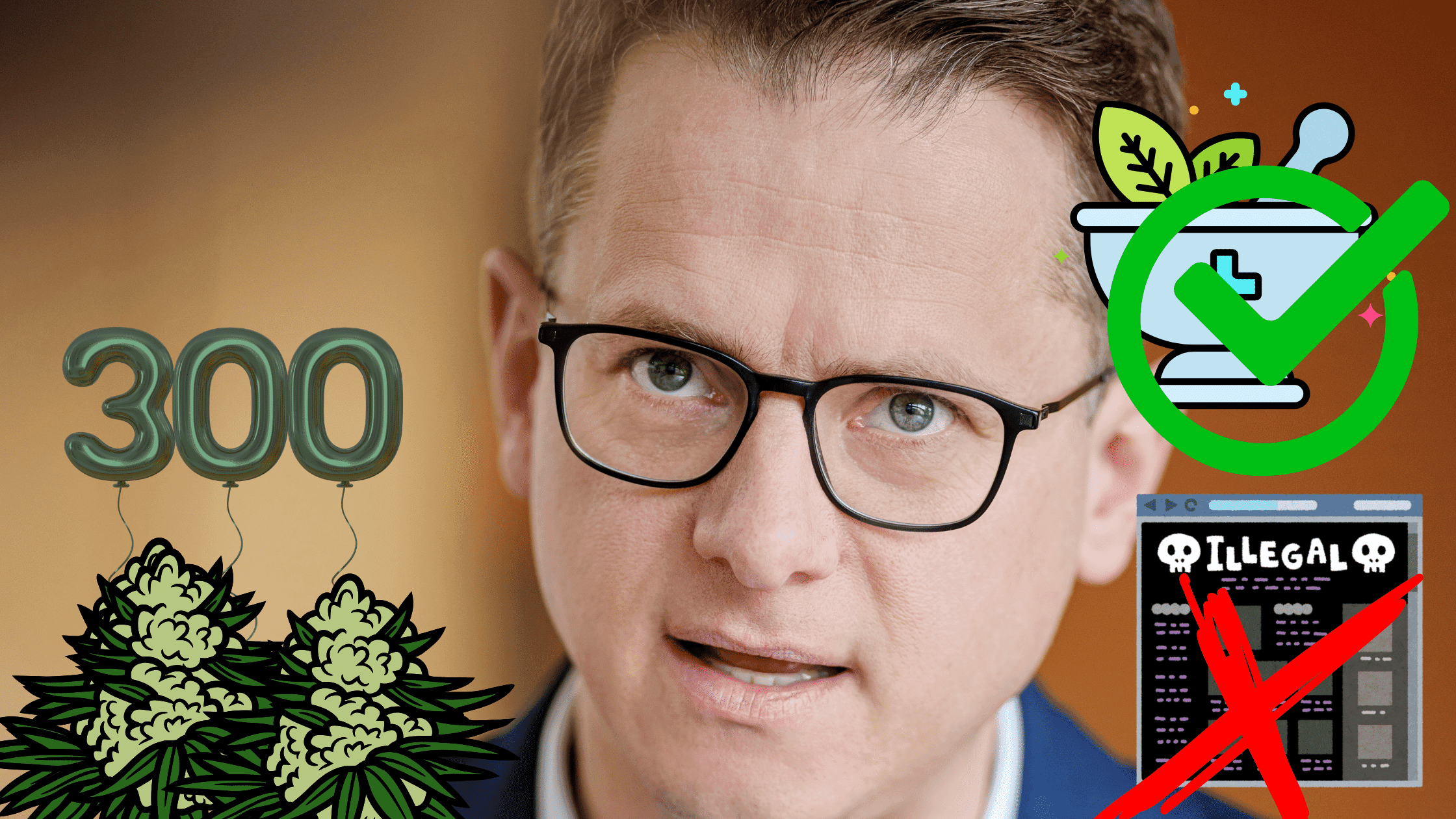
- Medical cannabis as a back door: He says it is widely misused for recreational purposes. According to him, imports rose from an initial 21 tonnes to more than 300 tonnes this year.
- Telemedicine: Some online providers issue a prescription roughly every two minutes on average. He wants a real medical assessment and says doctors who sell prescriptions as lifestyle products should risk their licence.
- Youth protection: Since partial legalisation in April 2024, almost a third fewer young people reach early intervention programmes.
- Possession and home grow: He calls the 50 gram limit and three plants too generous. An evaluation report describes a case of three plants yielding 3.5 kilograms.
- Public consumption: He would support a ban, but doubts the SPD would go along.
None of that is new. The interesting part comes next.
The pharmacy question
Rybicki asked him directly what, in his view, speaks for selling cannabis in pharmacies. Streeck did not dodge. Five million people in Germany use cannabis, he said. He doesn't like it, but it is a fact. Then he asked whether these people should really have to go to a dealer. Home grow and cannabis clubs exist, he added, but only few people use them.
One answer earlier, he had already said Germany needs to discuss how to handle recreational use in order to push back the black market further and strengthen youth protection.
To be precise: the word “pharmacy” came from the question, not from Streeck. He does not propose a model. But he doesn't dismiss the idea either, and he backs it with the very argument supporters of a regulated market have been making for years.
Rybicki summed it up in her LinkedIn post on the interview: while his party wants to roll back legalisation, Streeck is putting an additional legal sales channel on the table.
The ministry line
Health Minister Carsten Linnemann (CDU) is going the other way. At the German Pharmacists' Day in Munich, he warned that medical cannabis was “completely out of control” (Pharmazeutische Zeitung). He is pushing to ban first prescriptions via telemedicine and the mail-order delivery of cannabis flower (Fieldfisher). The bill itself was approved by cabinet under his predecessor Nina Warken (apotheke adhoc).
The ministry's logic: less access, less misuse. Streeck shares the diagnosis. But he asks the question that logic leaves open: where do people go once access gets tighter?
Our take: Streeck knows the demand is real
Streeck's own numbers describe a market. If imports go from 21 to over 300 tonnes and much of it ends up in recreational use, that is demand, not a loophole. And five million consumers don't disappear when one channel closes.
That leaves him with a dilemma. Anyone who wants to fight the black market and narrow medical access at the same time needs an answer to where that demand goes. By his own account, clubs and home grow don't absorb it. What remains is the dealer or a legal, controlled channel.
Streeck is not calling for full legalisation. But he is not telling people to go to the dealer either, and he engaged with the pharmacy question instead of shutting it down. For a CDU politician in his role, that is more than a side remark. Whether it becomes more than a question in an interview depends on whether he raises it inside the coalition. He himself expects an agreement on the cannabis law only next year.
For the industry, the signal matters. The debate in Berlin is no longer only about closing the medical channel. The question of a regulated adult-use channel is back on the table, voiced by the government's own drug commissioner.
Side note: in the same interview, Streeck also distanced himself from the SPD's proposed care levy on private insurers, saying he strongly doubts it would be lawful.
Disclosure: the author is an entrepreneur and investor in the cannabis industry.
Sources
- Britta Rybicki: interview with Hendrik Streeck, Handelsblatt, 18 November 2026
- Britta Rybicki, LinkedIn post on the interview
- Pharmazeutische Zeitung
- Fieldfisher
- apotheke adhoc