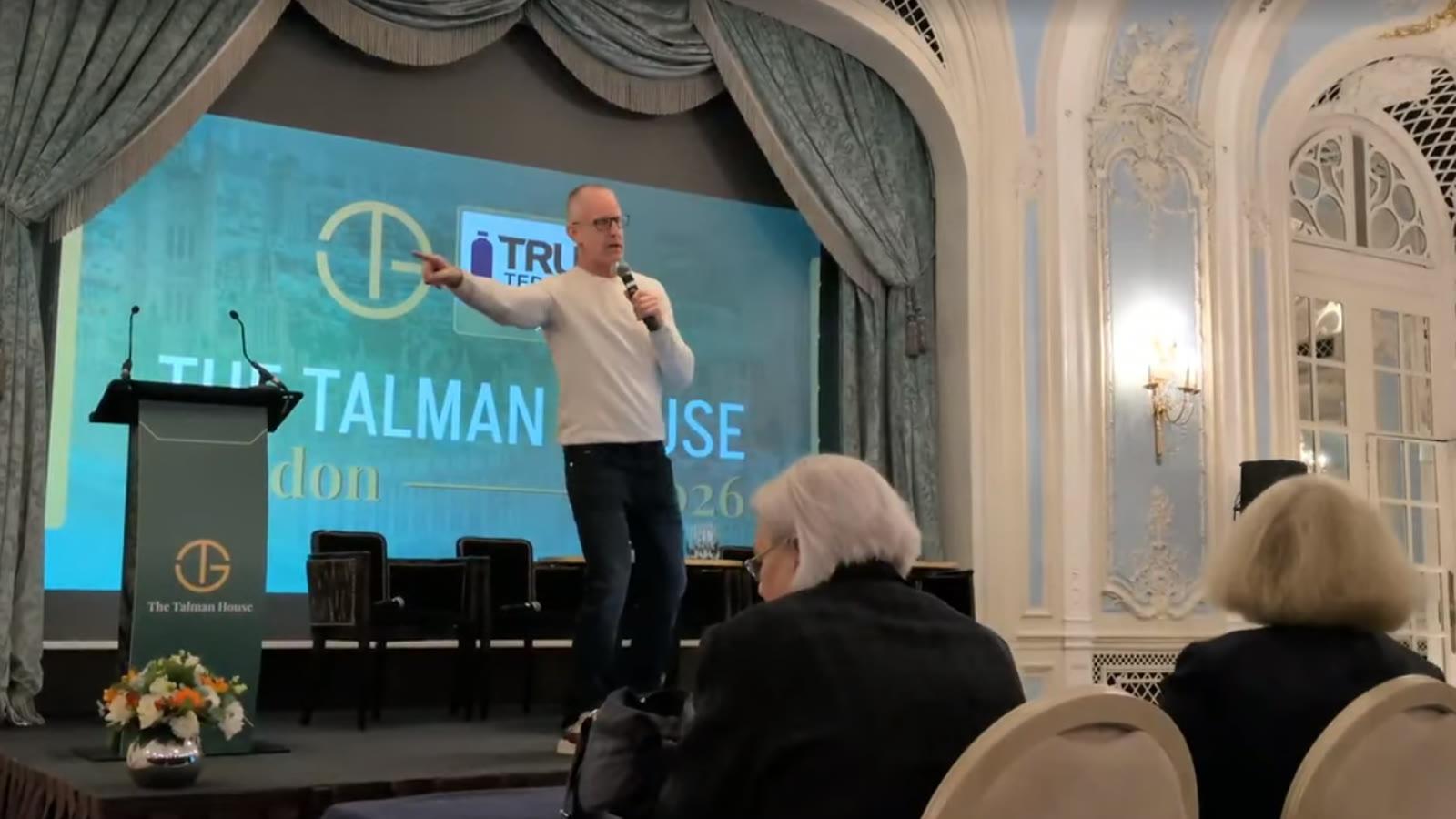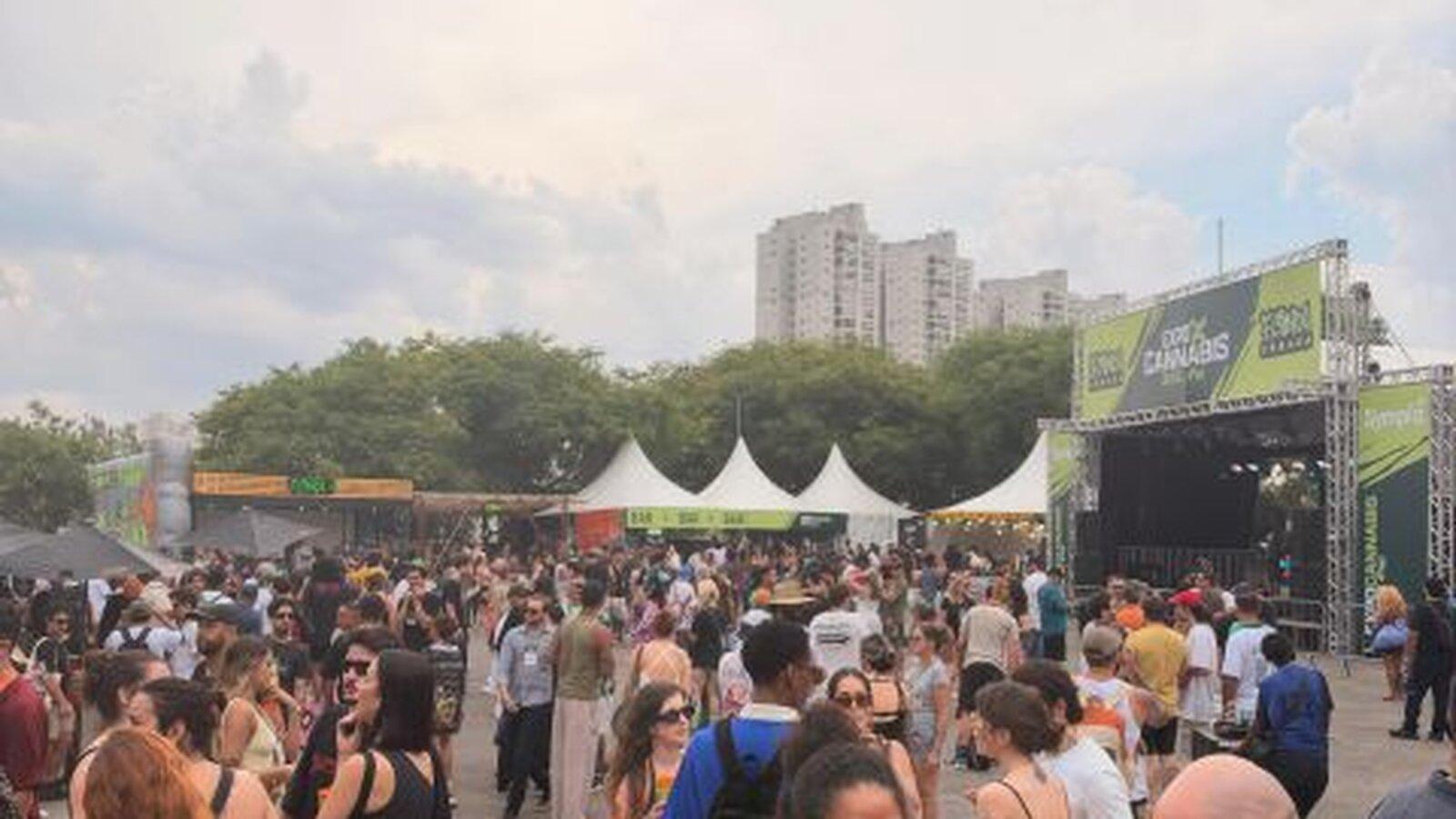
Last week, Latin America's cannabis community gathered in São Paulo, on a scale we in Europe only see at very few trade fairs. The fourth ExpoCannabis Brasil ran from 20 to 22 November at São Paulo Expo. Two days earlier, investors and entrepreneurs met at the Cannabis Business Hub. On the same day, Kaya Mind, the country's leading data house, published its new yearbook. For the first time, Brazil had a week in which market, policy and data all came together in one place.
My short version up front: Brazil has more than one million patients, no adult-use market, a brand new cultivation framework and a problem we know well in Germany. Almost everything is imported.
The week at a glance
| Date | What | Where |
|---|---|---|
| 18 Nov 2026, 2 to 7 pm | Cannabis Business Hub, the fair's official B2B format | São Paulo Expo, Pavilion 8 |
| 18 Nov 2026 | Kaya Mind's 5th Anuário da Cannabis Medicinal | Presented at the Business Hub |
| 20 to 22 Nov 2026 | ExpoCannabis Brasil, 4th edition, motto "Para Além da Planta" | São Paulo Expo, Pavilions 7 and 8 plus outdoor area |
The fair: from 21,000 to around 50,000 visitors in four years
ExpoCannabis Brasil is an offshoot of Uruguay's ExpoCannabis and only launched in 2023. The first edition drew around 21,000 visitors, and in 2025 the organisers counted 45,000. For 2026 they had announced 47,000 to 50,000 visitors. The official final figures are not out yet.
| Key figure | 2026 |
|---|---|
| Booths | 344 (around 38% more than 2025) |
| Brands | around 262 from 14 countries |
| Expected visitors | 47,000 to 50,000 |
| Speakers | 65 on the programme |
| Expected sales at the fair | around USD 1.5 million (organiser's forecast) |
| Admission | 18 and over |
The big fairs are no longer in the US. São Paulo now plays in the same league as Mary Jane in Berlin, which had announced up to 75,000 visitors for 2026. MJBizCon in Las Vegas reported around 20,000 attendees in December 2025, albeit as a pure B2B show. My impression: the industry's biggest crowd pullers are now in Europe and the emerging markets, not in the US.
The fair is led by Larissa Uchida, CEO of the organising company CannEXP. The 2026 edition was symbolically launched at the Consulate General of Uruguay in São Paulo.
What stands out: the state sits on the panel. On Friday, Anvisa director Thiago Lopes Cardoso Campos discussed the regulatory sandbox for patient associations (RDC 1.014/2026) at the International Forum, a rule he was rapporteur for. The panel on the new cultivation rules (RDC 1.013/2026) brought together Anvisa, the public agricultural research agency Embrapa, the university UFSC and the Ministry of Agriculture MAPA. There were also panels on veterinary cannabis and livestock.
Pharma gets its own area. Because manufacturers and importers are barely allowed to advertise to the public, there was a dedicated pharma area where labs meet doctors and pharmacists directly. Alongside it ran the Dr. Elisaldo Carlini Scientific Congress, workshops and a knowledge arena.
The motto shows the direction. "Para Além da Planta", meaning "beyond the plant", stands for hemp as a building material, food, cosmetics and agriculture. Thiago Cardoso of Kaya Mind summed it up at the launch along these lines: what happens to the stalk, the fibre, the seeds?
"It was super crowded, just like Mary Jane in Berlin."
Mariana Larea Arias, on site in São Paulo
"We are still at the beginning here, and it feels like 2019, when there was a sense of new beginnings everywhere."
Vitus Lietsch, International Sales Manager at Sinceritas EU
Brazil data: 1.11 million patients, 1.14 billion reais
In 2026, Brazil's medical cannabis market crossed the billion mark for the first time: 1.14 billion reais in revenue, up 17% on the previous year. That is the headline of the fifth edition of the Kaya Mind yearbook, published on 18 November. The billion had actually been expected for 2025, but that year closed at 970 million reais. Kaya Mind forecasts 1.29 billion reais for 2027 and 1.45 billion reais for 2028.
Patients by access route
| Channel | Patients 2026 | Share |
|---|---|---|
| Individual import (RDC 660/2022) | 457,000 | 41% |
| Pharmacy | 406,000 (2023: 97,000) | 37% |
| Patient associations | 248,000 | 22% |
| Total | 1.11 million (+27% vs. 2025) |
Three years ago the figure stood at 430,000 patients, an increase of 158%. Patients in 91% of all Brazilian municipalities have imported cannabis products since 2019. Anvisa expects to issue around 262,000 import authorisations in 2026, 35% more than in the record year 2025.
Prices are falling, revenue grows slower than patient numbers
A bottle of oil now costs around 650 reais in the pharmacy, down from 735 reais in 2024. Via import, the average is 556 reais, and at associations 352 reais. Kaya Mind puts it simply: the price is falling. Patient numbers grow by 27%, revenue by only 17%. We know that pattern from Germany.
Telemedicine is already standard
- 43% of prescriptions now run through digital platforms, up from 13% at the end of 2023.
- 58% of import patients are treated remotely by a doctor in another state.
- Since 2021, Kaya Mind has mapped around 8,089 doctors linked to cannabis, but the prescriber base is growing only slowly.
Pharmacy channel: approval is the bottleneck
Only 18 companies currently sell cannabis products in Brazilian pharmacies. 58 applications are waiting for Anvisa review, and an assessment takes 344 days on average. Aché, a major national pharmaceutical company, has now entered the market with its own business unit, a medical team and training programmes.
Regulation: Brazil rebuilds its entire supply chain in 2026
On 28 January 2026, Anvisa's board adopted a new framework for medical cannabis, published on 3 February. It was triggered by a November 2024 ruling of the Superior Court of Justice (STJ), which obliged the government to regulate cultivation. It explicitly does not open an adult-use market.
| Resolution | Content |
|---|---|
| RDC 1.012/2026 | Cultivation for scientific research, with special authorisation |
| RDC 1.013/2026 | Cultivation by companies for medical and pharmaceutical purposes, max. 0.3% THC, in force since 4 August 2026; georeferencing, traceability and a security plan are mandatory |
| RDC 1.014/2026 | Regulatory sandbox for non-profit patient associations under Anvisa supervision, without commercialisation |
| RDC 1.015/2026 | New rules for manufacturing and importing cannabis products, replacing RDC 327/2019 |
| RDC 660/2022 | Remains: individual import on prescription |
Important for investors: only legal entities may cultivate. Private individuals are excluded. Since May, Anvisa has also allowed the export of products and inputs made in Brazil.
According to Kaya Mind, associations already cultivate at least 35 hectares, 30% more than in 2025. At the same time, headwinds are expected from the incoming, more conservative Congress, though more for industrial hemp and adult use than for the tightly controlled medical market.
Analysis: Brazil is an import market, and that becomes a risk in 2027
More than 90% of imported products come from the US. Most brands in Brazil have their products made there. Kaya Mind gives an example: of a product that sells for around 500 reais in Brazil, 300 reais or more stay with the US manufacturer.
The US is currently debating a bill that could restrict the export of hemp derivatives. According to Kaya Mind, more than 95% of products imported from the US exceed the limit under discussion. If the bill passes, 2027 could be the first year in which the Brazilian market shrinks. Brands are already looking for alternatives, but Latin America alone cannot absorb the demand. Colombia, Uruguay, Switzerland and Canada are named as options.
"The agenda alone shows that everyone was there. In Brazil, regulators, research, patient associations and industry sit on the same panel. My impression from afar is that they are seriously working towards a stable industry and want to learn from the mistakes we made in Europe."
Falk Altenhöfer, founder of Cannabis-Startups.com
My assessment:
- Brazil becomes a topic for European manufacturers. Anyone with EU-GMP capacity and export experience should look at Brazil in 2027. The same applies to Colombian facilities with European quality standards.
- We know this pattern. Telemedicine becomes the main entry point, prices fall, revenue per patient declines. Brazil is following a very similar path to Germany, just with many times the patients.
- The pharmacy wins. From 97,000 to 406,000 pharmacy patients in three years. The bottleneck is approval, not demand. Anyone already in the application process has a real head start.
- Domestic cultivation takes time. The 0.3% THC limit and strict requirements mean that import dependency will remain for several years.
Sources
- Kaya Mind, Anuário da Cannabis Medicinal 2026 (5th edition), published 18 November 2026
- ExpoCannabis Brasil, official website
- ExpoCannabis Brasil, programme 2026
- Cannabis Business Hub
- Anvisa: new rules for medical cannabis production
- Mattos Filho: Anvisa resolutions on medical cannabis
- Machado Meyer: new regulatory framework for medical cannabis (PDF)
- Mary Jane Berlin
- MJBizCon 2025: attendance and exhibitor figures as reported by the organisers
Photos: Vitus Lietsch, Sinceritas EU